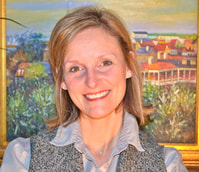
Sherri Grady is a licensed professional counselor/supervisor, trained spiritual director, teacher, artist and author in private practice in Mount Pleasant, South Carolina. She graduated with a B.A. in English from the College of Charleston and from The Citadel Graduate School with a Masters in Education in Clinical Counseling and a Masters in Education in Guidance Counseling both with high honors. Sherri has 30 years of experience working in a variety of mental health settings providing services in outpatient clinics, residential treatment centers, and private practice. In addition to providing therapy to clients and families, Sherri has held supervisory and director positions in both community mental health centers as well as residential treatment centers.
Current Licenses, Certifications, & Intensive Training
Licensed Professional Counselor (LPC) #3195 -S.C. Board of Examiners
LPC Supervisor (LPCS) #4093 - S.C. Board of Examiners
National Certified Counselor (NCC) - National Board for Certified Counselors
Certified EMDR Therapist - Certified through EMDRIA since 2016
Certified Safe and Sound Protocol Practitioner (SSP)
Certified Rest and Restore Protocol Practitioner (RRP)
Certified Integrated Listening System Practitioner (ILS)
Certified Heartmath Biofeedback Practitioner
Somatic Experiencing Practitioner (SEP In Training - Completed Beginning, Intermediate, and Advanced 1 training as of 8/20/25. Will complete Advanced 2 training as of February 2026. Currently accepting appointments for Somatic Experiencing
Trained in Clinical Hypnosis (ASCH) - 2023
Trained Spiritual Director - 2019 - 2021 - Selah Certificate Program through Leadership Transformations Inc.
Certificate in Spiritual Transformation - Transforming Center 2014
Professional Manuscripts
(1998) The Pediatric Emotional Distress Scale: A new brief screening measure. Journal of Clinical Child Psychology, 28, pp. 70-81.
(1997) Children and families coping with disaster. In S.A. Wolchik, and I.N. Sandler (Eds.) Handbook of Children Coping with Common Stressors: Linking Theory, Research, and Interventions.
Swenson, C., Saylor, C., Powell, P. Stokes, S., Foster, K., & Belter, R. (1996) Impact of a natural disaster on preschool children: Adjustment 14 months after a hurricane. American Journal of Orthopsychiatry 66(1). Pp122-131
Stokes, S., Saylor, C., Swenson, C., & Daugherty, T. (1995) A comparison of children’s reaction following three types of stressors. Child Psychiatry and Human Development, 26(2), PP. 113-123.
McDowell, A., Saylor, C., Taylor, M., Boyce, G., & Stokes, S. (1995) Ethnicity and parenting stress change during early intervention. Early Child Development and Care, 111, pp131-140.
Professional Memberships
Somatic Experiencing Institute Member (SE) - Member
EMDRIA - Member
International Society for Study of Trauma and Dissociation (ISSTD) - Member
International Society for Traumatic Stress Studies (ISTSS) – Past Member
Accelerated Experiential Dynamic Psychotherapy (AEDP) - Past Member
South Carolina Professional Society on the Abuse of Children (SPCSAC) – Past Board of Directors, Officer, Past Member
American Professional Society on the Abuse of Children (APSAC) – Past Member
Past Professional Task Forces/Projects
Member of National Residential Standards Task Force for Juvenile Sex Offenders – Revision Project
SAMHSA (Substance Abuse and Mental Health Services Administration) – United States of America Department of Health & Human Services – Field Reviewer for Federal Grant Submissions in area of Trauma
Association for Treatment of Sexual Abusers Organizational Ethics Committee Member
South Carolina Association for Treatment of Sexual Abusers Member and Officer
South Carolina Professional Society on the Abuse of Children 2006 Colloquium Committee Member
"In art, the hand can never execute anything higher than the heart can imagine.” Ralph Waldo Emerson
I love this quote by Emerson.
I think the concept is applicable in the process of growth and transformation as well. The mind can never execute anything higher than the heart can imagine . . . The heart is at the center of walking with others on their journey. . . no matter where it goes.